

A consistent person who can front your content, post after post.
An AI influencer is a person BrandWeave can show in posts and videos for one brand. You define who they are, approve a face and a voice, then reuse that same person in later content instead of a different stock model every time.
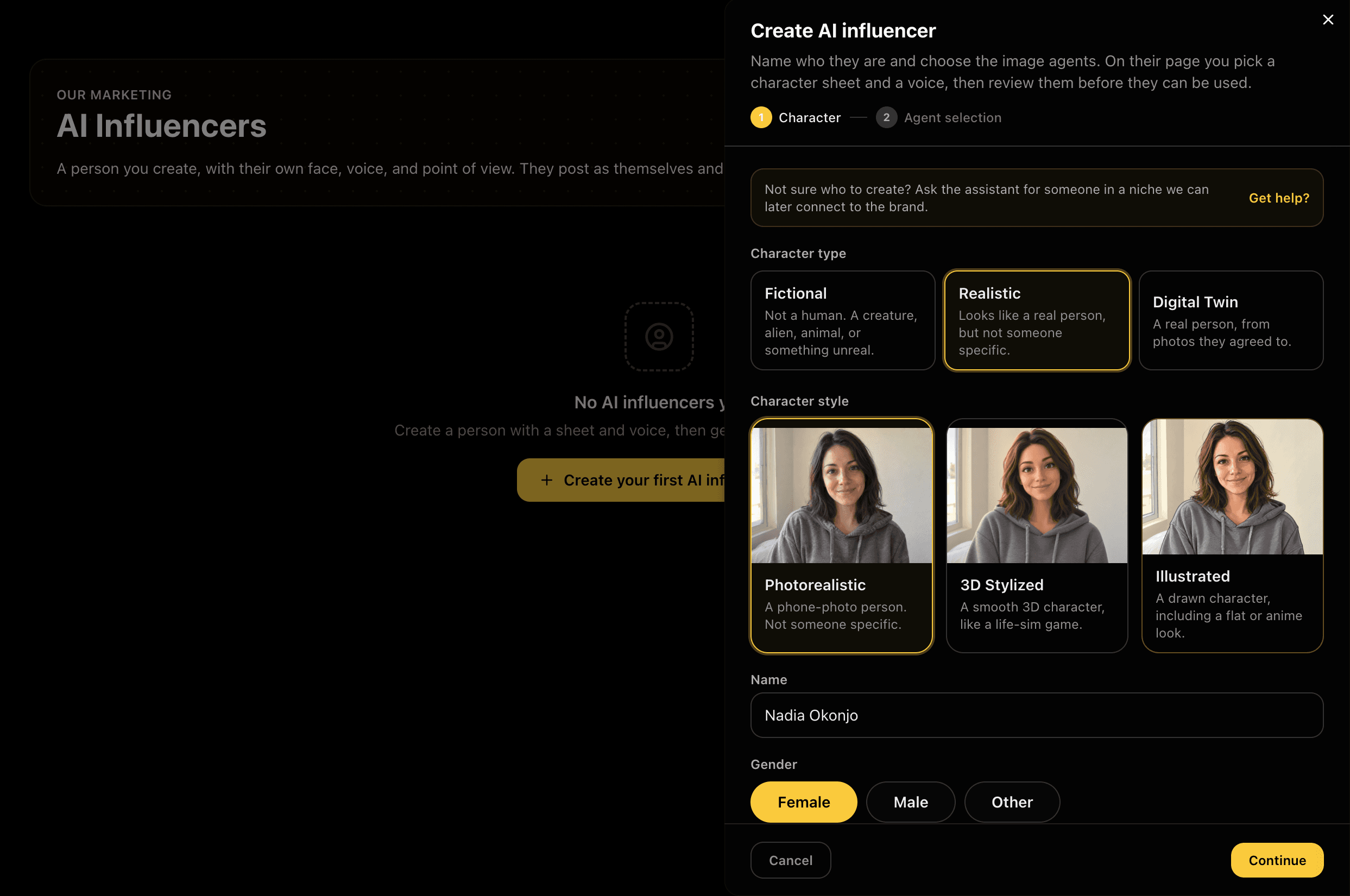
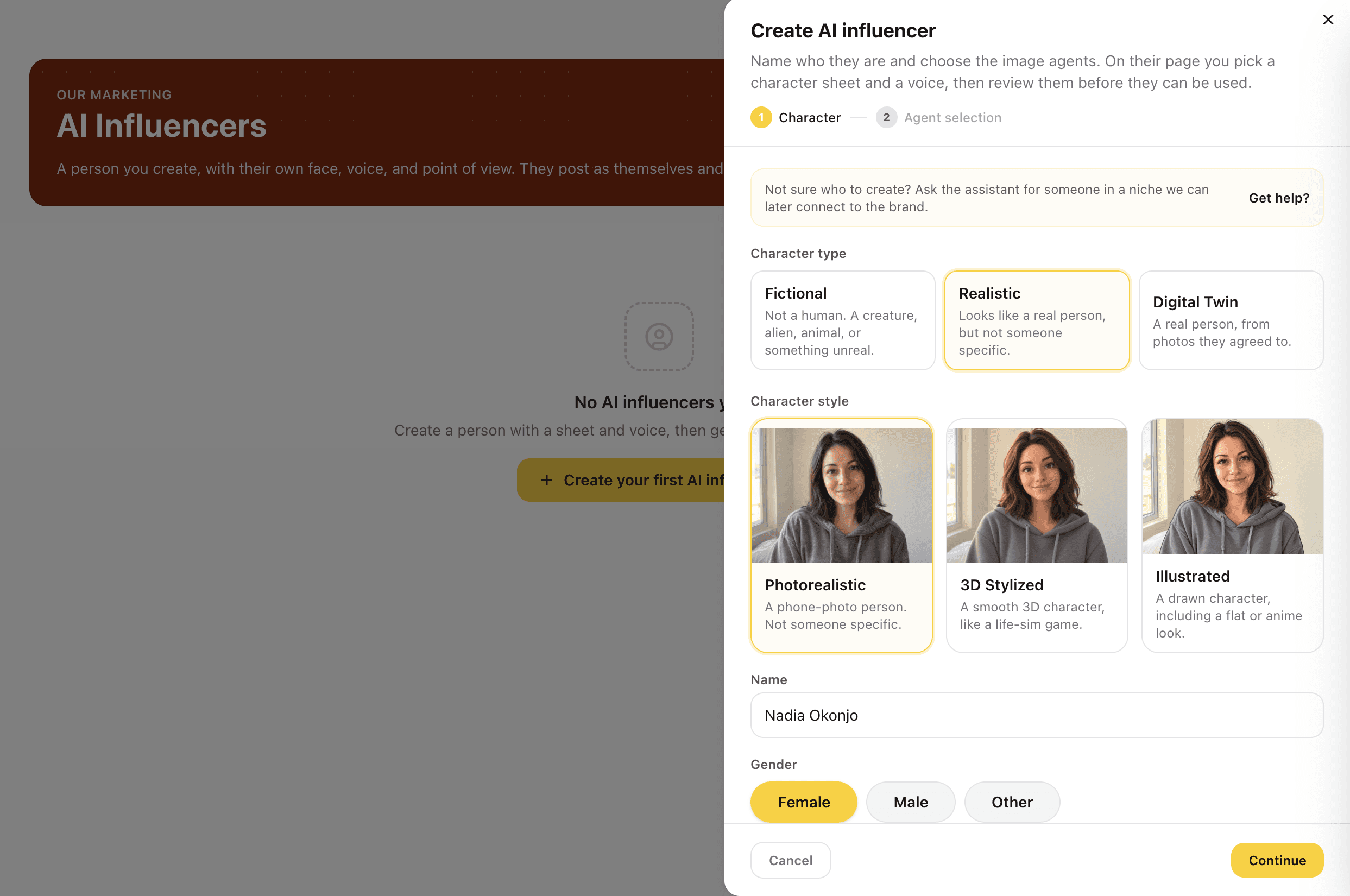
Decide Who They Are
Start with what kind of person this is. Fictional is not a human at all: a creature, an alien, something unreal. Realistic looks like a real person but is not someone specific. A digital twin is a real person, built from photos they agreed to. Then choose how they are drawn, photorealistic, 3D stylised or illustrated, and give them a name.
Character type is the decision with consequences. Realistic and fictional need nobody's permission; a digital twin needs the real person's.
Captures
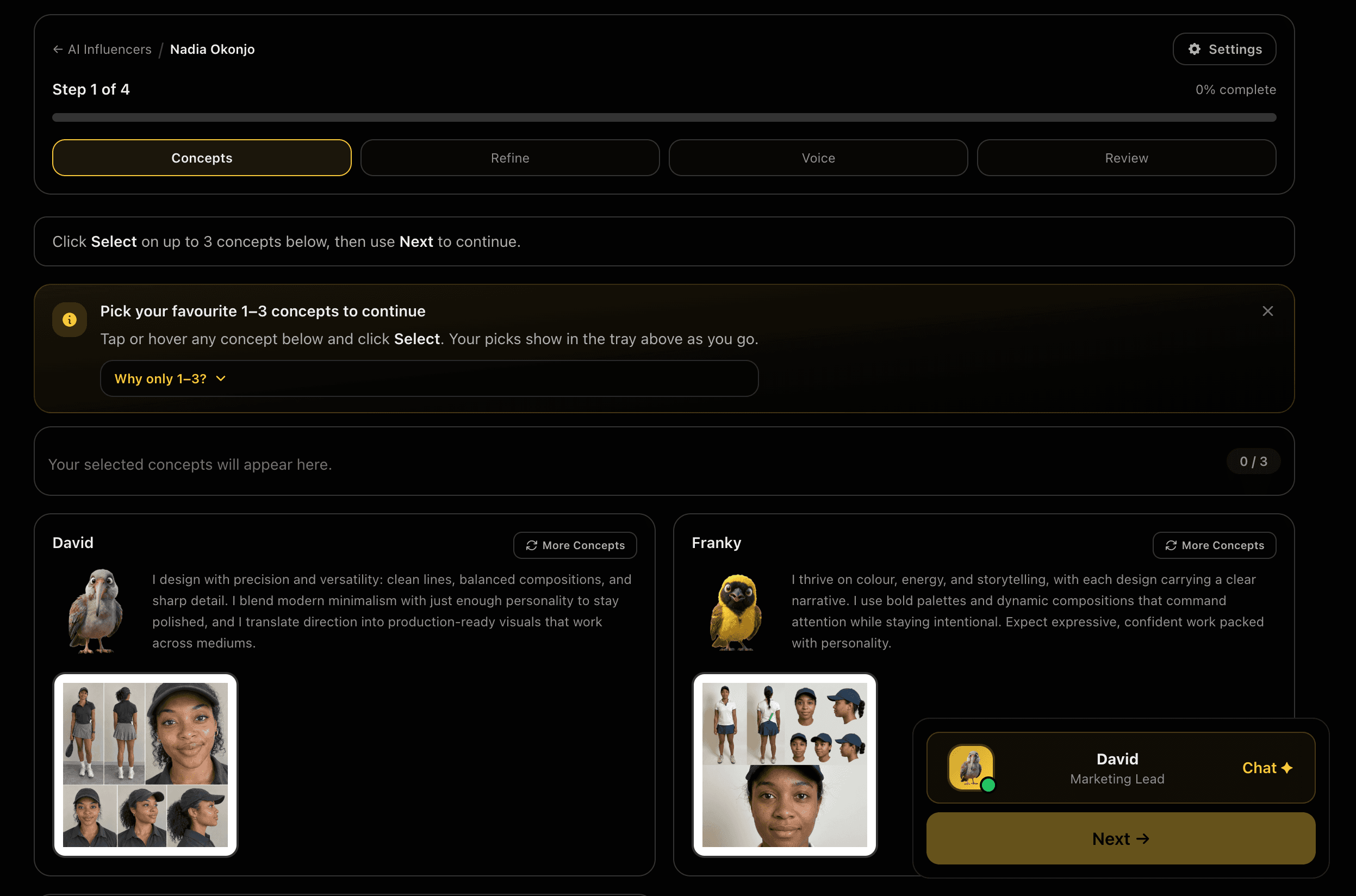
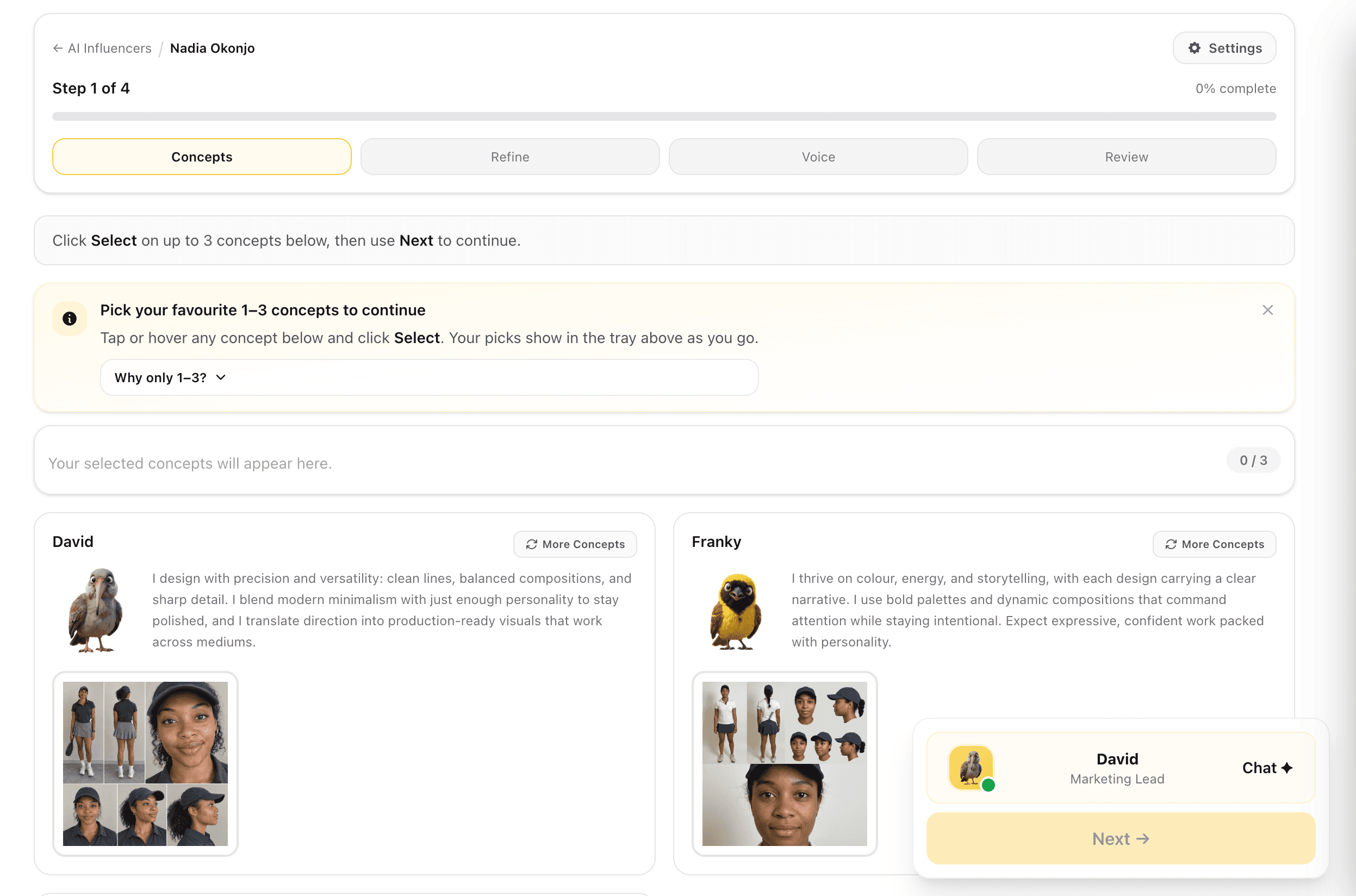
Pick From the Character Sheets
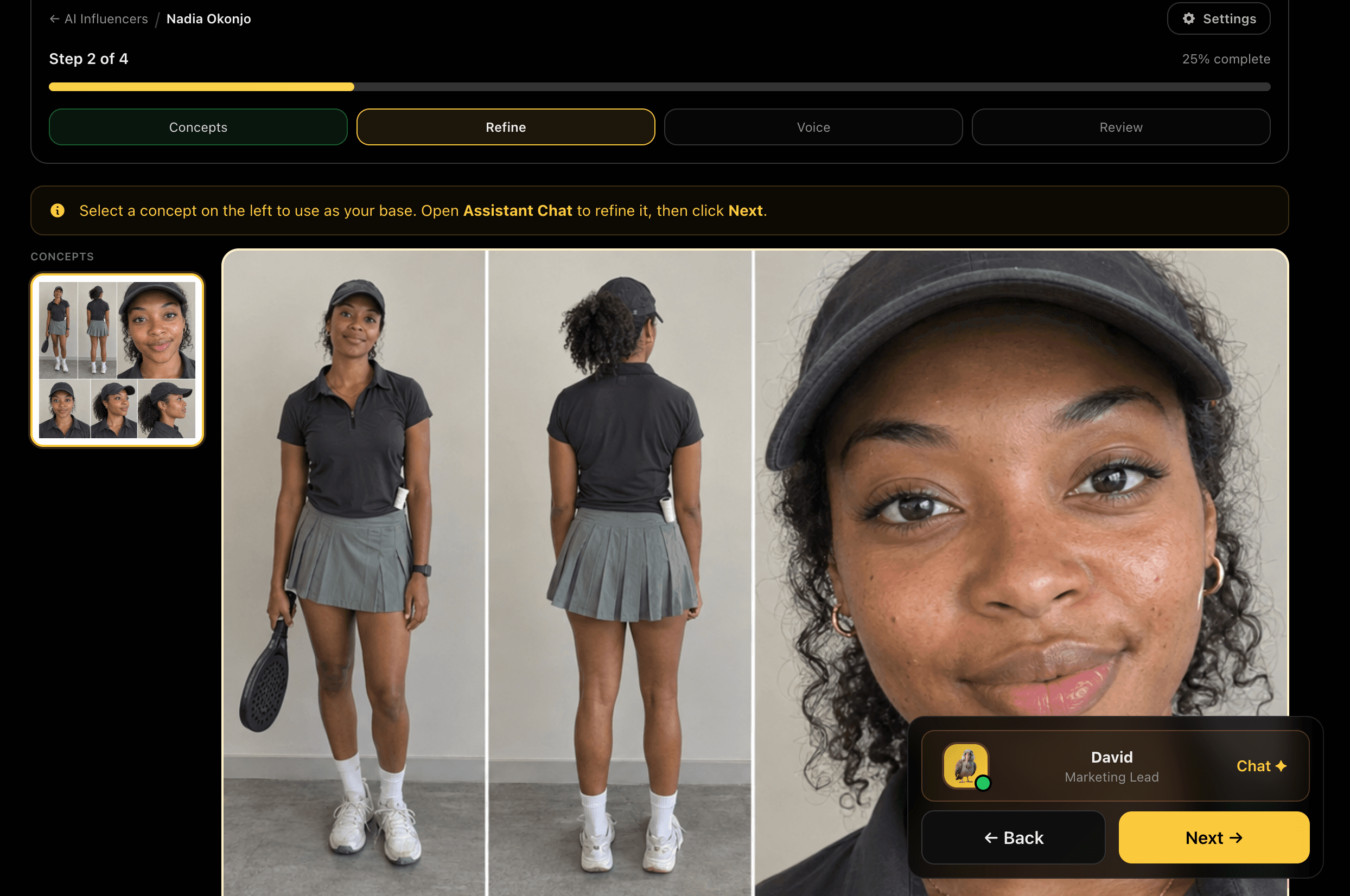
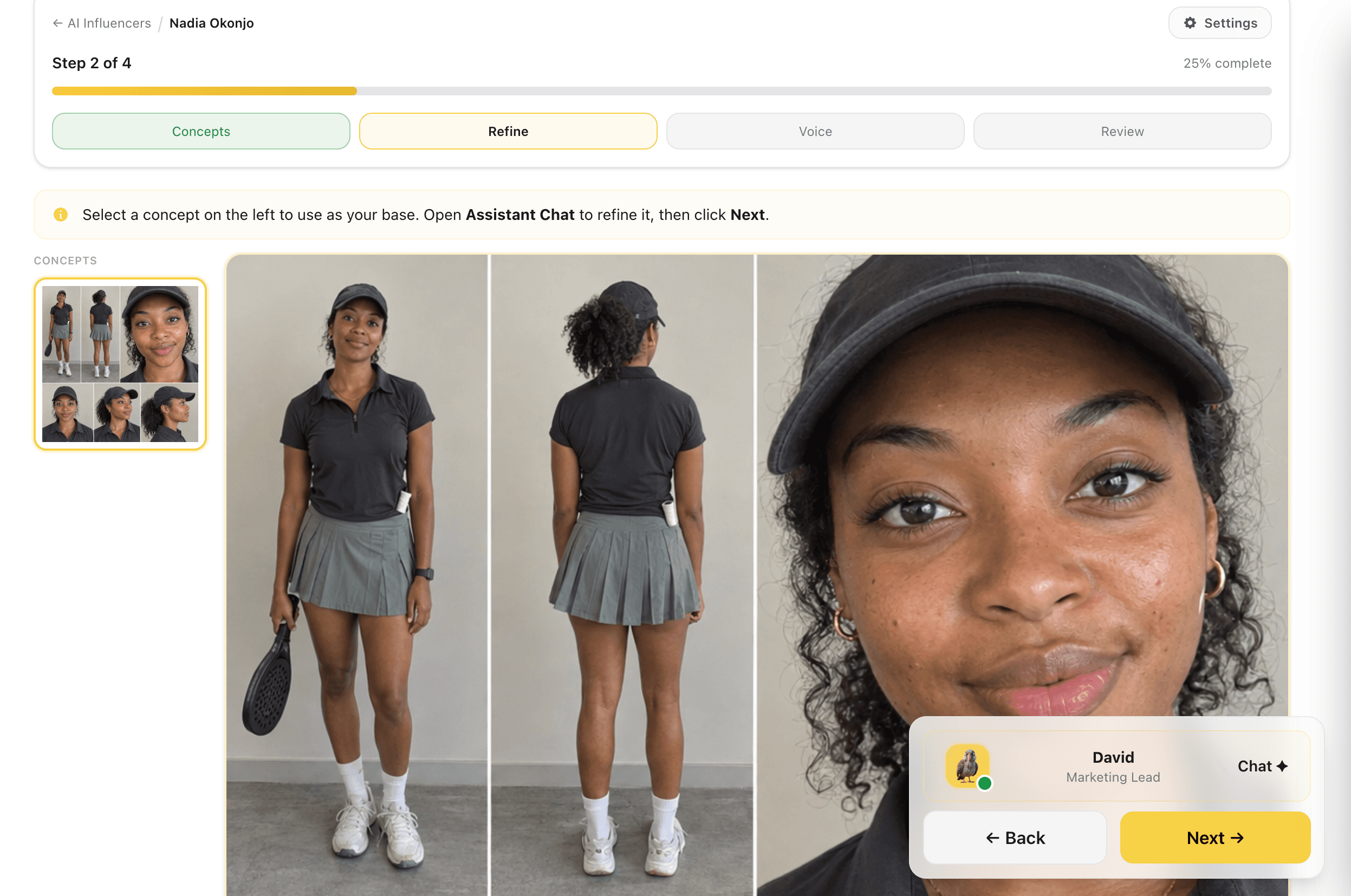
Each designer proposes the person as a character sheet rather than a single portrait: the same face from several angles, plus full body, in one grid. Take up to three forward. Judging a face from one flattering photo is how you end up with someone who cannot be drawn twice.
A sheet shows whether a face survives being turned. One portrait never does.
Captures
Refine the Sheet
The chosen sheet is the approved reference of their face, hair, skin and body, and it is what later posts match against for identity. See it large, front, back and close up, and refine it in Assistant Chat until it is the person you meant. Later pictures take the identity from the sheet, not its background or its grid.
A fixed visual reference is the difference between one recognisable person and a series of lookalikes.
Captures
Choose a Voice on the Same Line
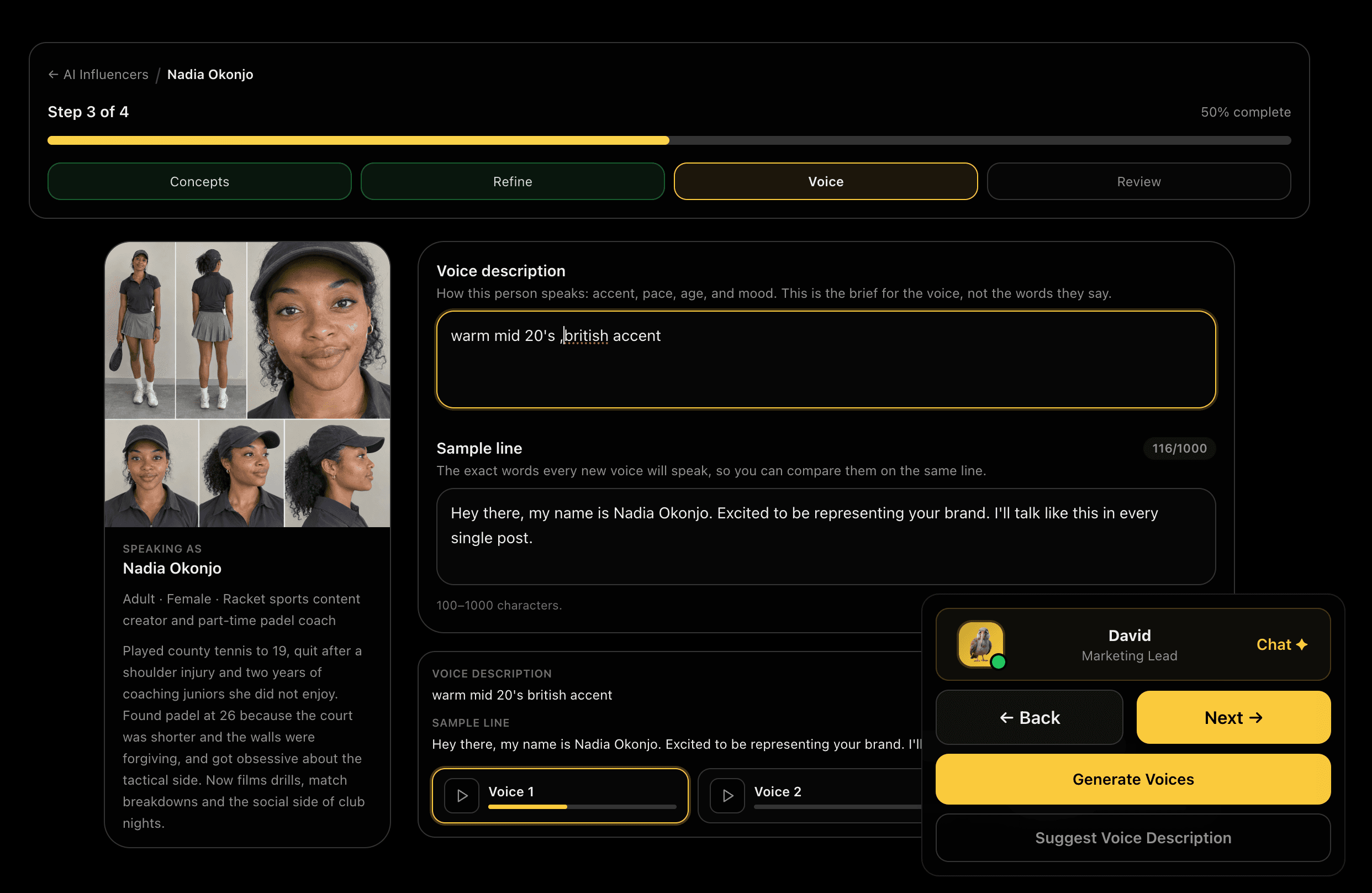
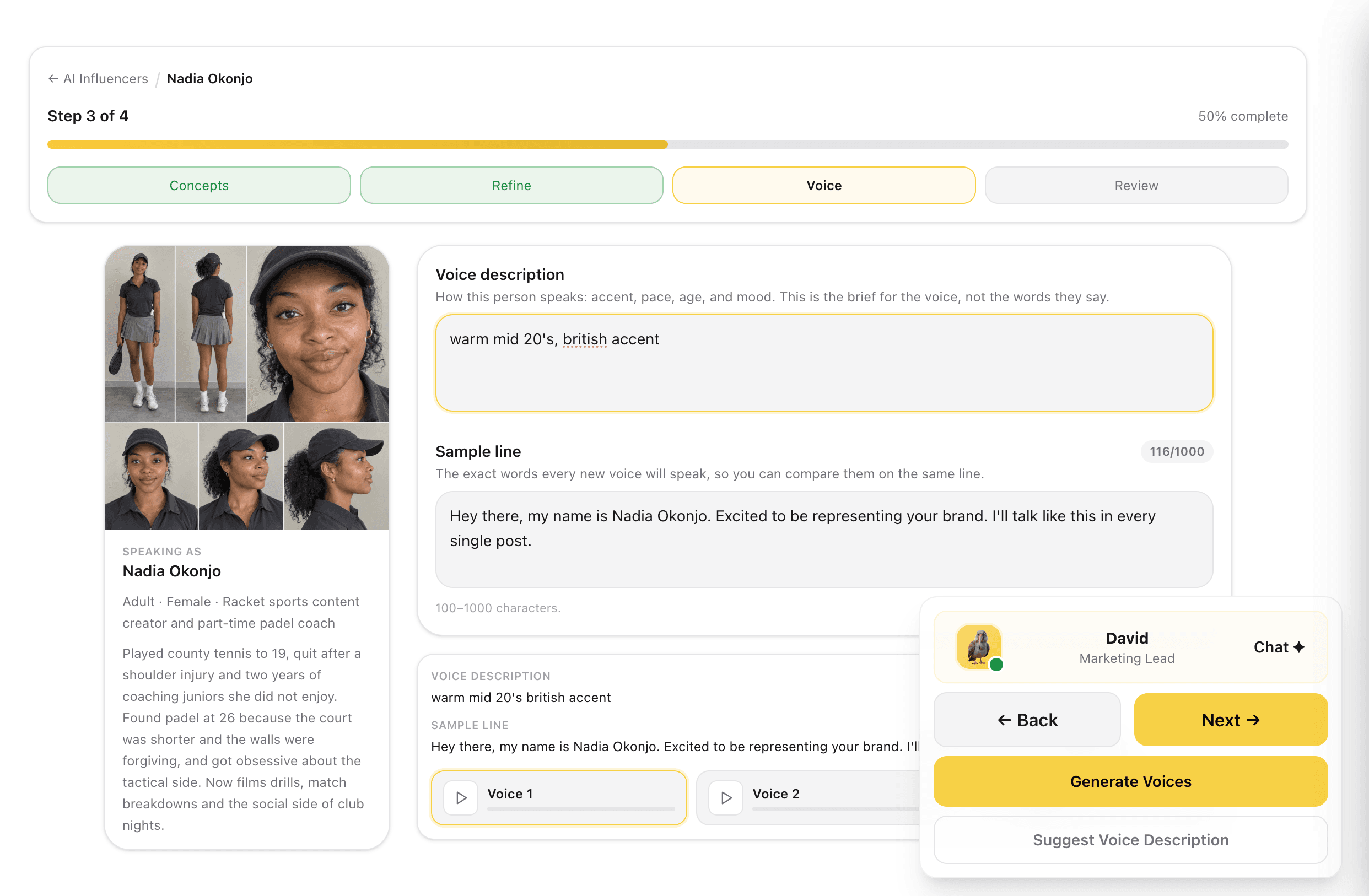
Describe how this person speaks, the accent, pace, age and mood, and generate voices from it. Every candidate voice reads the exact same sample line, so you are comparing voices rather than comparing scripts. A digital twin uses a recording of the real person instead, and should only ever be built with their permission. The voice is saved to the person and used whenever they speak on video.
Holding the sample line constant is what makes the comparison honest, and saving the voice to the person is what keeps them sounding the same months later.
Captures
Read the Profile, Then Approve
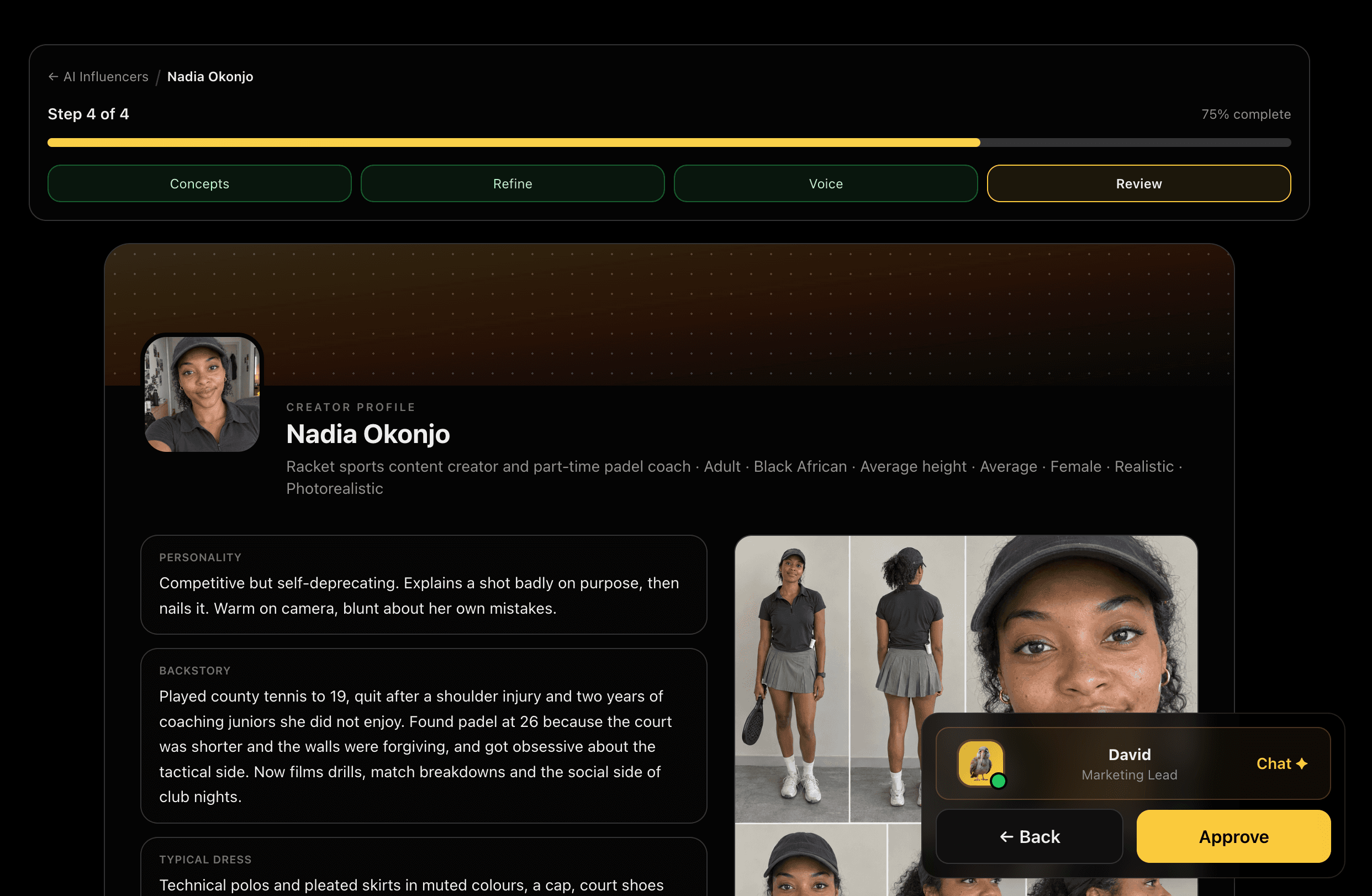
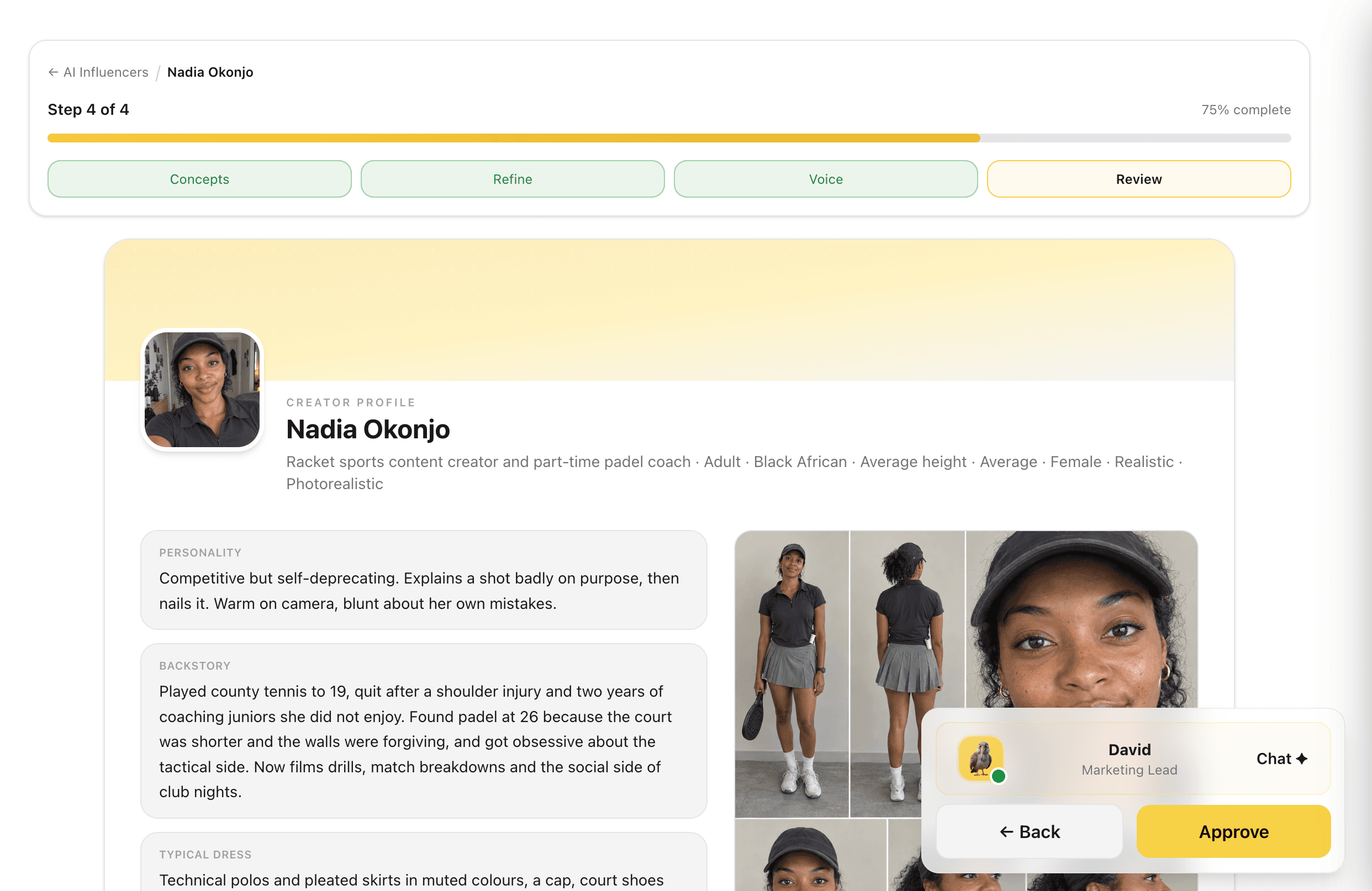
The finished creator profile puts it all in one place: who they are, their personality, their back story, how they typically dress, and the character sheet beside it. Approving locks the character, so the face, voice and story do not change after that. Their own asset library of outfits, rooms and pets stays open, so later posts can reuse the same jacket or the same kitchen.
Locking identity while leaving the library open is what makes the person reusable without freezing the content.
Captures
Their Post, or Your Brand's
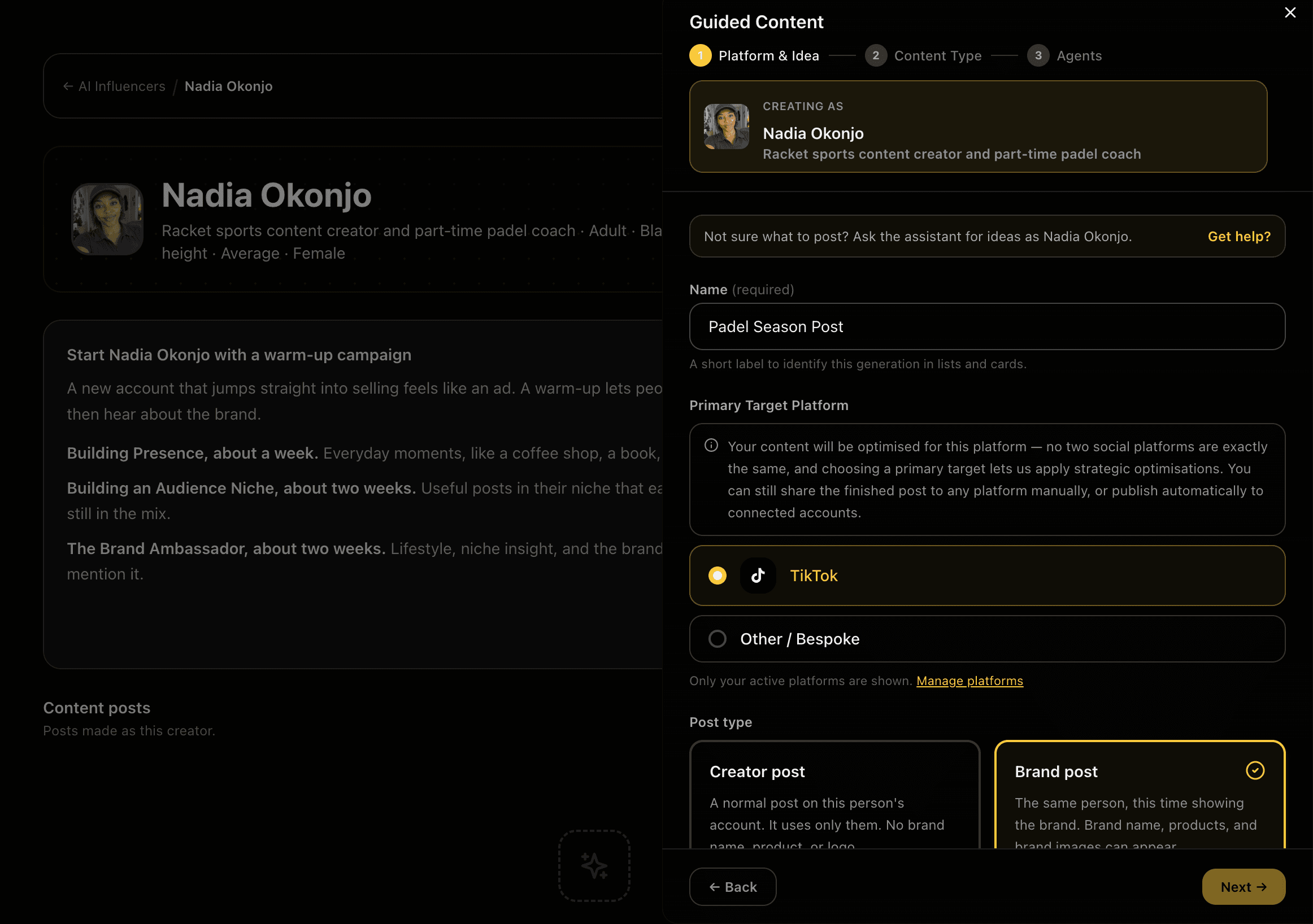
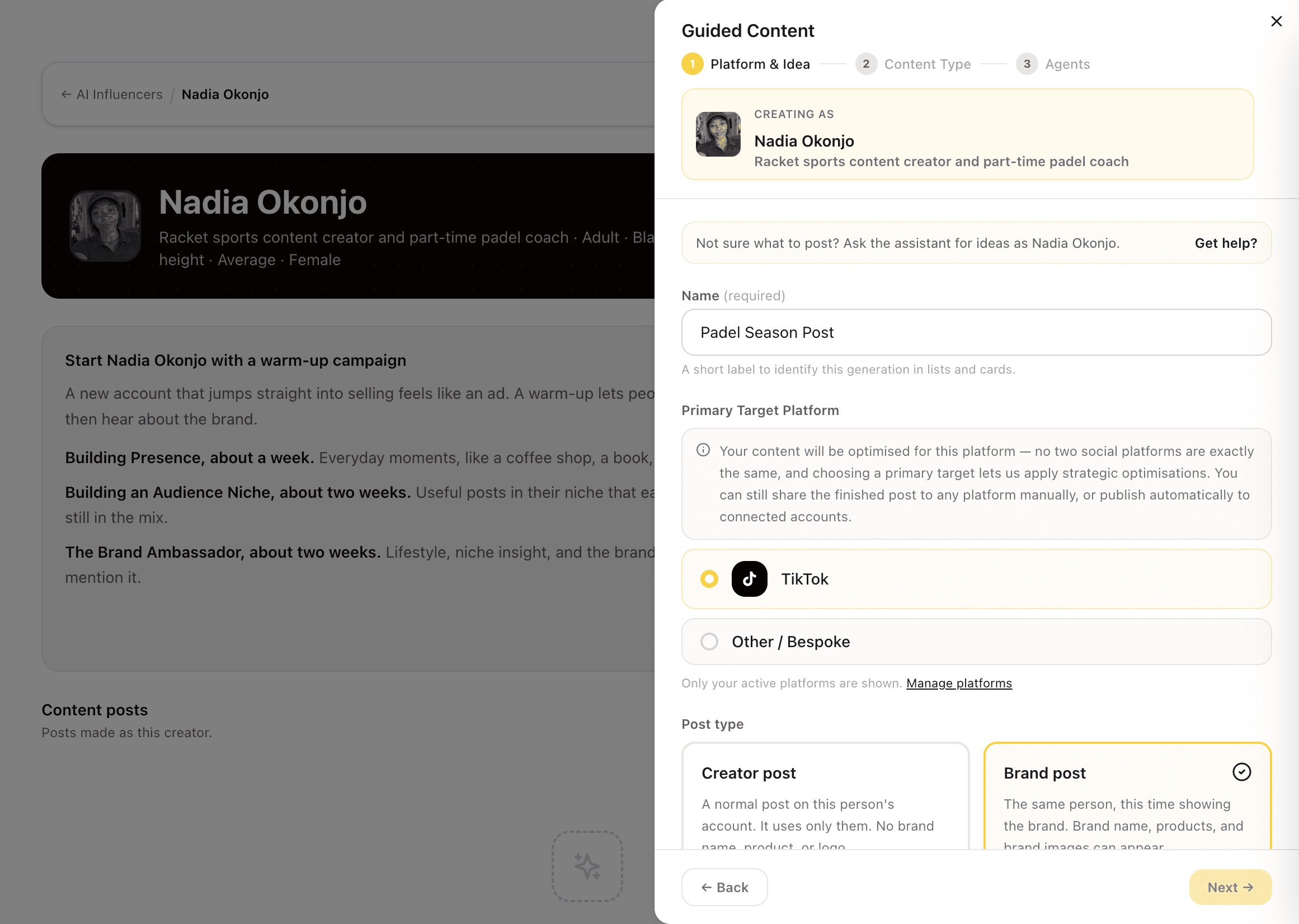
Create a post as that person and choose the primary platform, because no two platforms are the same and the content is optimised for the one you pick. Then choose the kind of post: a creator post is a normal post on their account, with no brand name, product or logo anywhere. A brand post is the same person, this time showing the brand.
Separating creator posts from brand posts is what stops a feed reading like an unbroken advert.
Captures
Concepts as a Real Feed Card
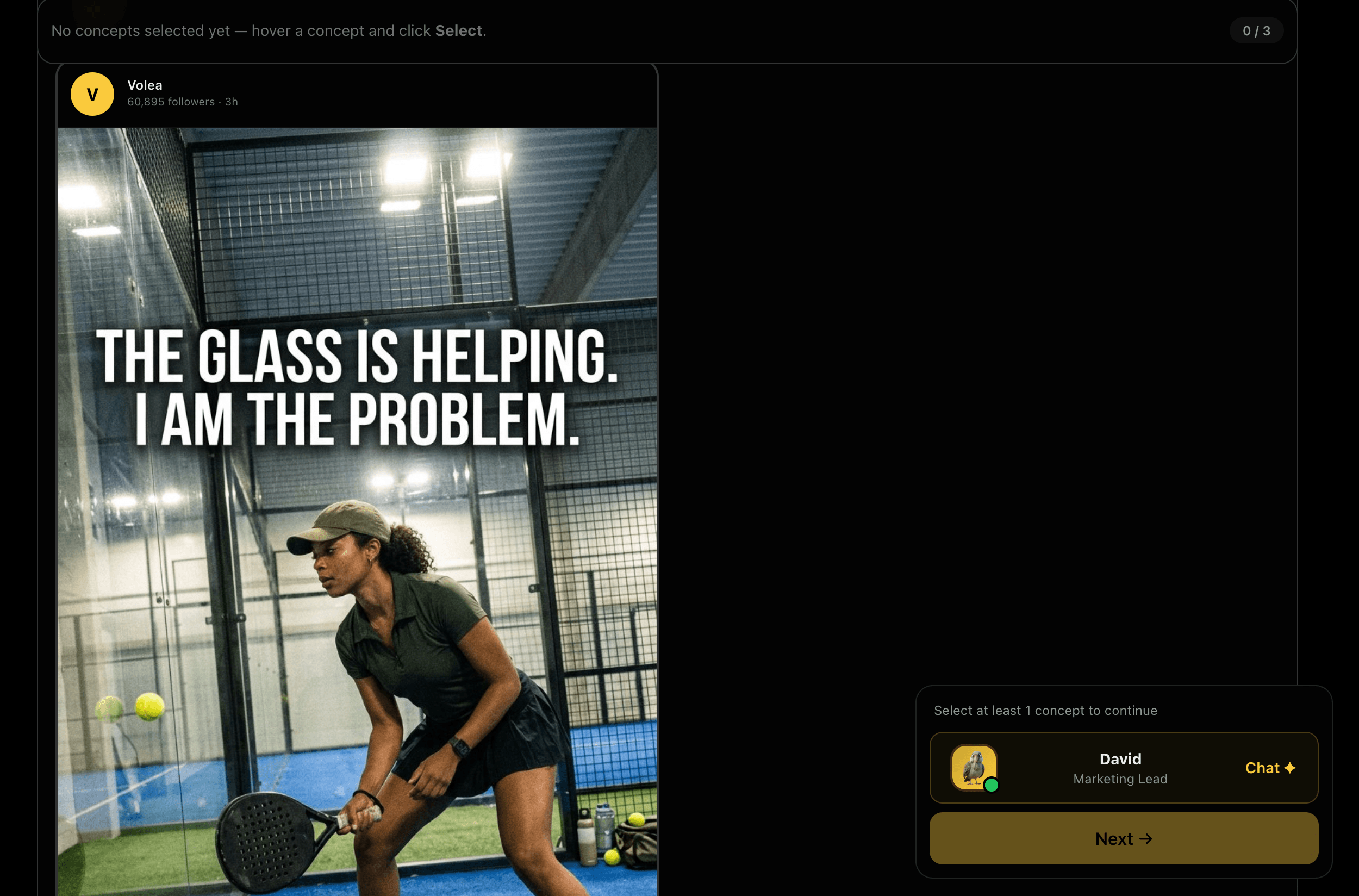
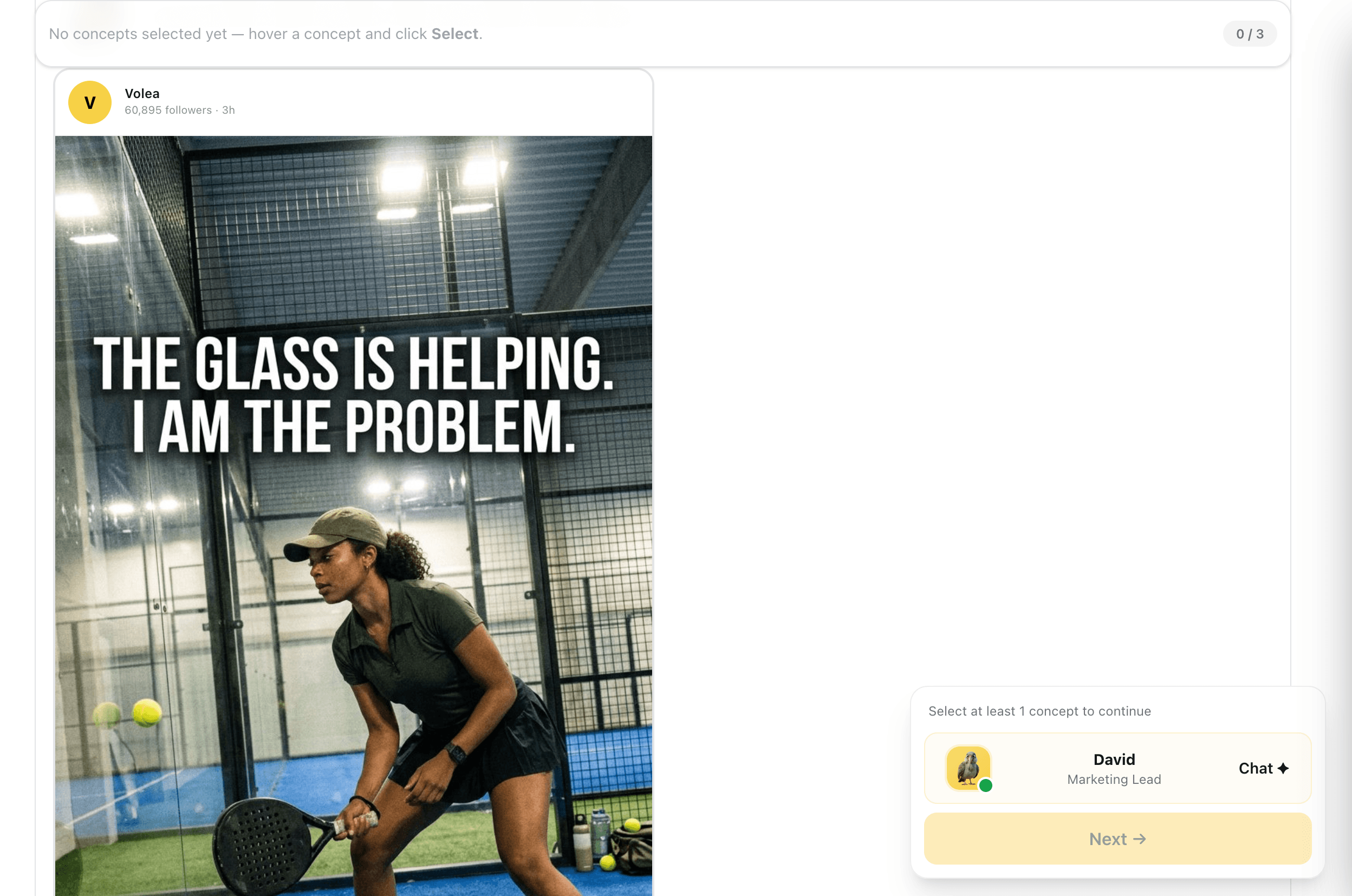
Concepts arrive previewed as the post people will actually scroll past, in the platform's own frame and aspect ratio, with the same face from the character sheet placed in a real scene. Pick the ones worth taking forward.
Judging a post as a feed card rather than a bare image is the only way to see whether the hook survives a thumb moving at speed.
Captures
Edit the Post and the Caption
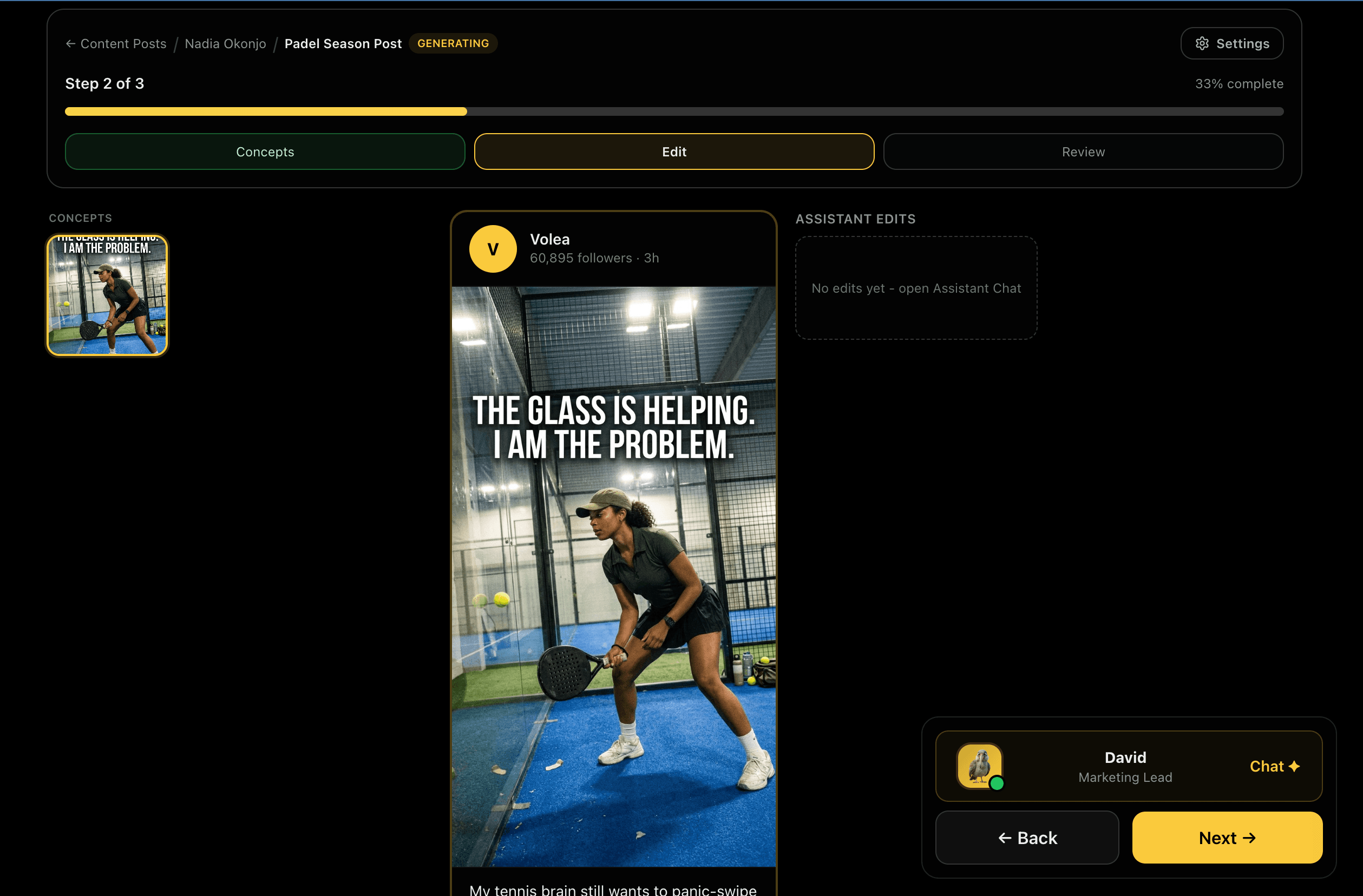
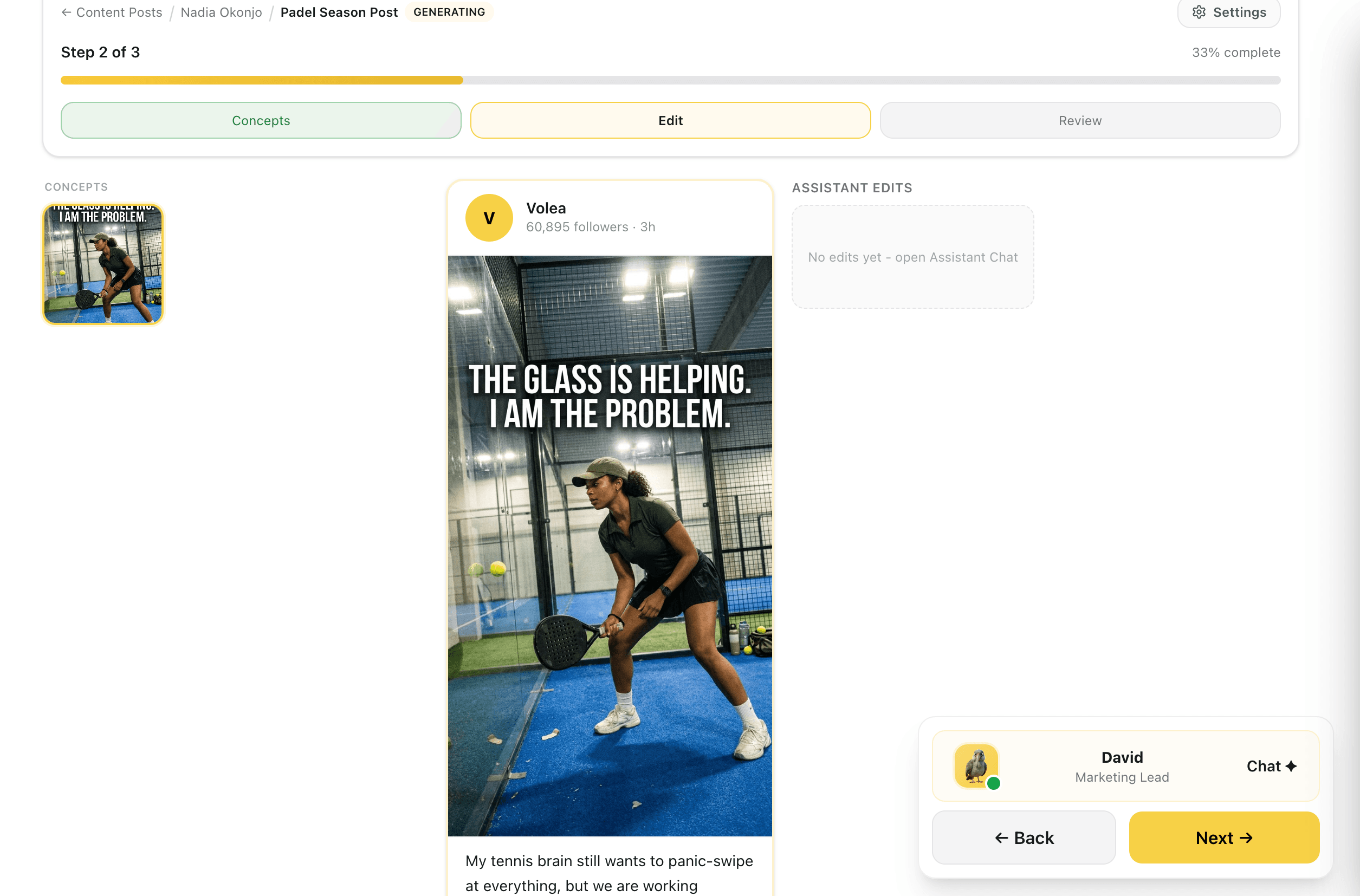
The chosen concept opens with its caption written alongside it, and Assistant Chat edits either one. Every edit is listed beside the post, so you can see what was changed and step back from it.
The image and the words it ships with are edited in the same place, rather than written in one tool and pasted into another.
Captures
Review Against the Brief
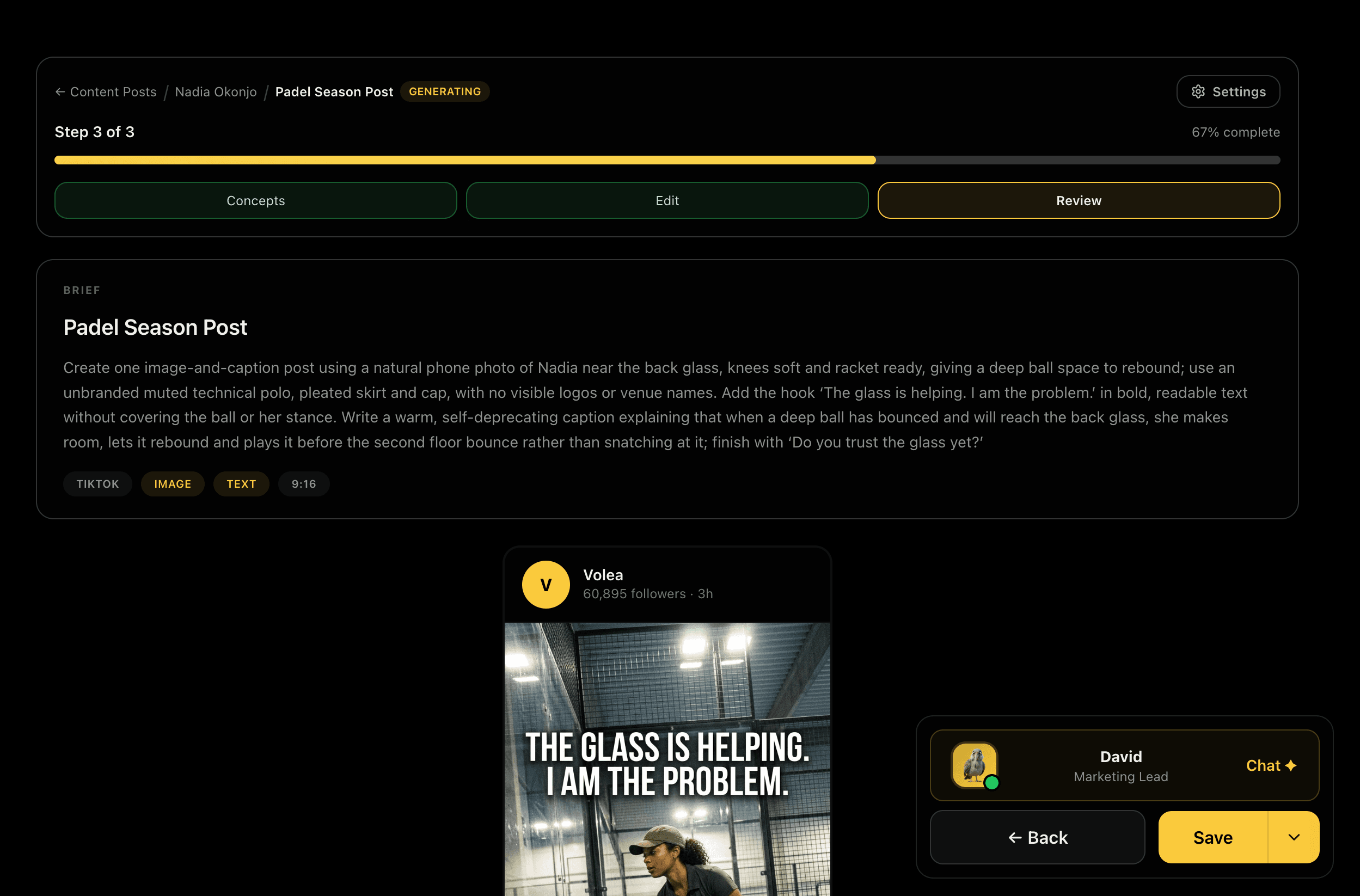
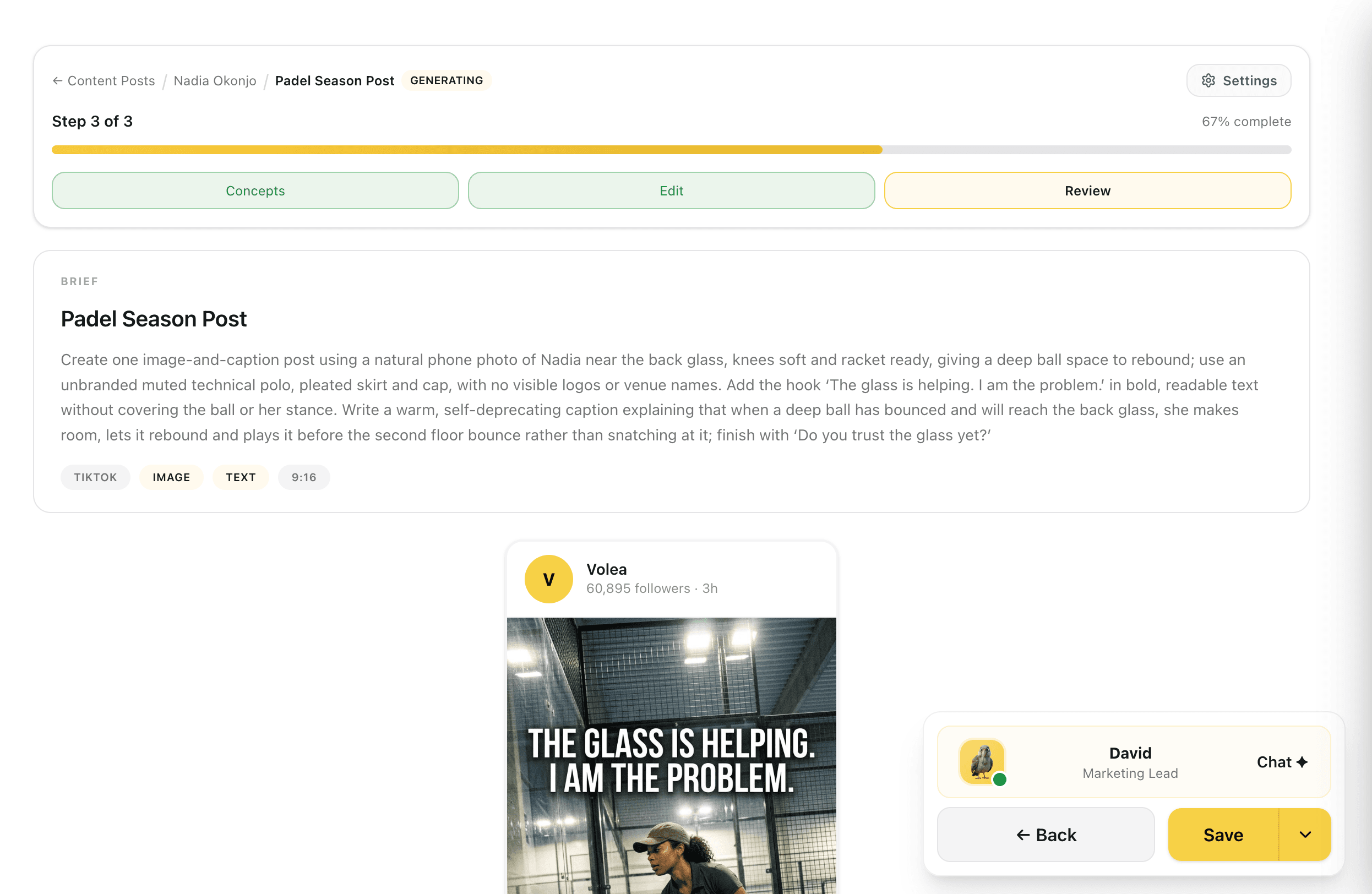
Before saving, the brief that produced the post is shown in full beside it: the scene, the wardrobe, the hook, the tone the caption had to strike, and the platform, format and aspect ratio it was built for. You are checking the result against the instruction, not against a memory of it.
Written briefs make a post reviewable by someone who was not there when it was created.
Captures
Warm Them Up Before They Sell
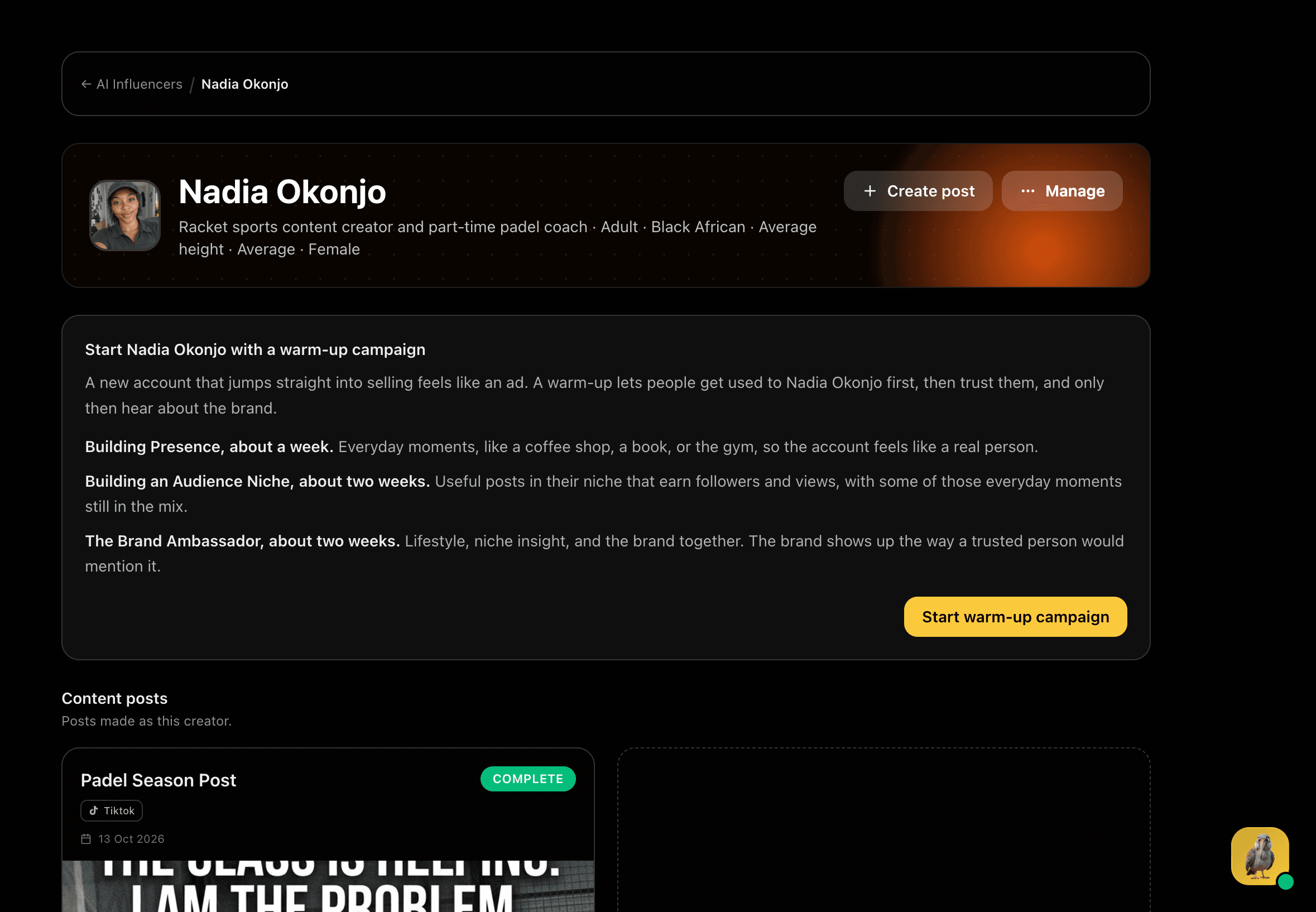
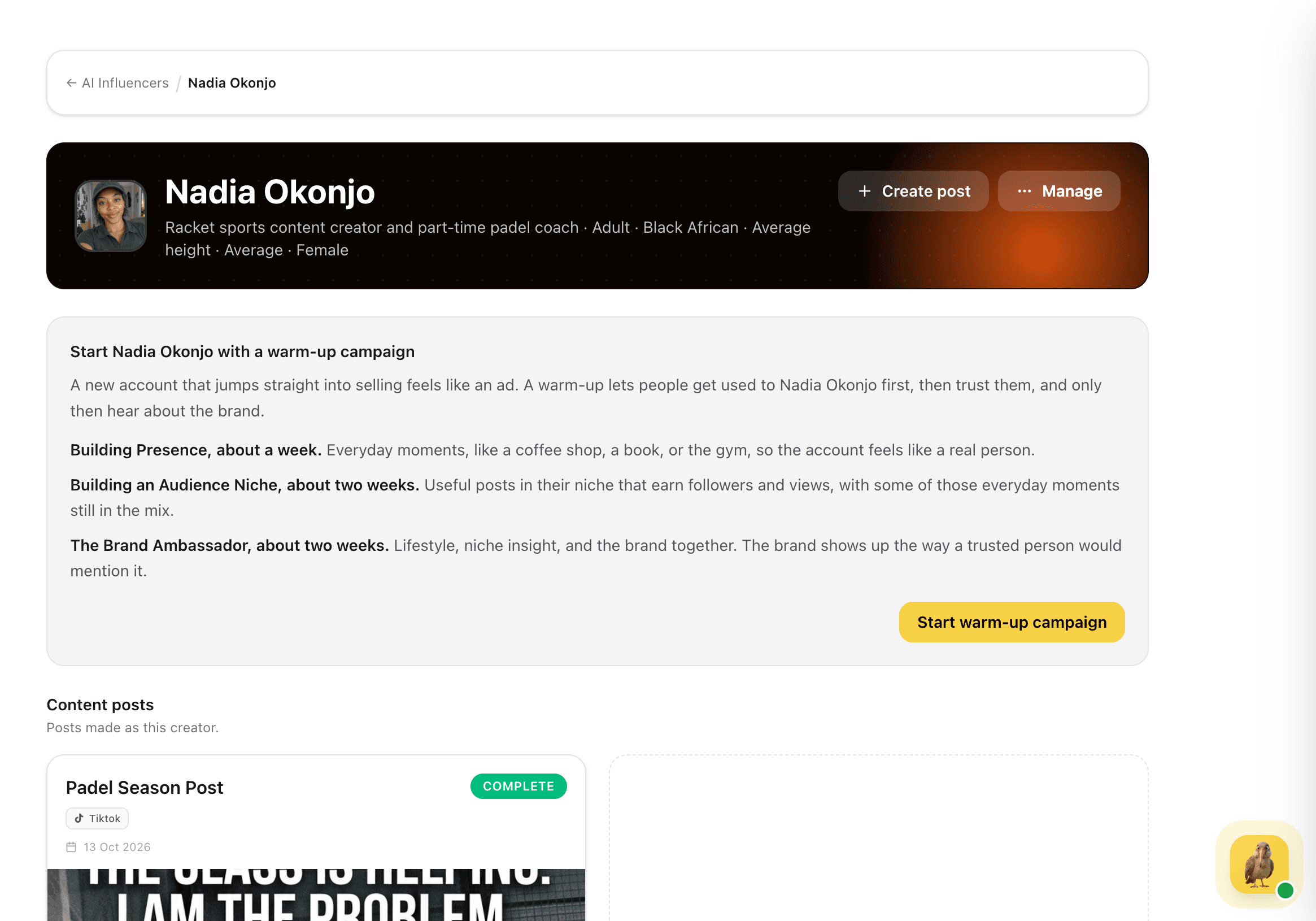
Each influencer keeps their own page with every post they have made. A new account that jumps straight into selling reads like an ad, so BrandWeave offers a warm-up campaign that builds the account in phases: about a week of everyday moments so the account feels like a real person, about two weeks of useful posts in their niche that earn followers, then about two weeks where lifestyle, niche insight and the brand appear together.